what can you do to keep scar tissue from forming aroung an breast implant
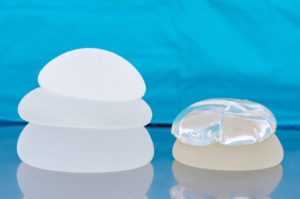
The almost common complication after breast augmentation is indeed capsular contracture. All the same, this incidence is quite rare—I have only seen it in a small handful of my patients. About patients do very well without any major bug! That said, every bit a proponent of "informed consent," I aim to educate patients about every potential complication that could occur with a particular procedure, how it might impact them and what is done to foreclose and/or treat it, should it occur.
Capsular contracture describes circumferential constriction of scar tissue effectually a breast implant that causes the breast to feel firm, look distorted or have a abrupt, circular edge around information technology—or in the worst case, to be painful. Information technology is graded from Grade I (the breast is soft and normal), Grade 2 (the breast looks normal but feels business firm), Grade III (the breast is business firm and visible distortion or deformity can be seen) and, finally, Class Four (the scar tissue effectually the implant is painful).
The leading theory well-nigh why and how capsular contracture occurs is due to an irritant effectually the implant once information technology is in the body, such as leaner or blood. At my practice, we take many steps to prevent introduction of bacteria around the implant and removal of claret from the implant environment to avoid capsular contracture from occurring, starting on 24-hour interval one.
These prophylactic measures include a dose of intravenous antibiotics at the start of surgery before an incision is fabricated; the apply of drains to remove wound fluid that is produced by the trunk around the implant during healing; the use of postoperative oral antibiotics until the drains are removed (3 to half dozen days on average); and instructions to avert showering the surgical area until 24 hours after the drains are removed.
In addition, we recommend that procedures that naturally stimulate bacteria existence stirred up and potentially entering the bloodstream (including teeth cleaning, dental procedures, sinus surgery, rhinoplasty, septum surgery, colonoscopy or endoscopy) exist avoided for three months after surgery.

What happens at three months? Zilch magic! However, later on any Plastic Surgery procedure, there will exist increased blood circulation to the area that was operated on for effectually iii months to facilitate healing. After approximately three months, the claret supply tends to return to normal in the surgical sites. In turn, the risk of bacteria entering the bloodstream and existence preferentially carried to the breast implant pockets decreases.
Subsequently the three calendar month postoperative visit, we give our patients a prescription for prophylactic antibiotics earlier any of the procedures listed in a higher place (procedures of the nose, rima oris or gut) if they choose or demand to undergo ane of these treatments. This preventative stride consists of a one-time dose of either Amoxicillin (or Clindamycin for those patients allergic to Amoxicillin or Penicillin) that is taken one 60 minutes before their dental/sinus/colonoscopy procedure.
After that, no boosted antibiotics are needed until the next process (usually every vi months for dental visits and every ane to three years for colonoscopy). This single antibody dose is not enough to cause stomach upset or a yeast infection. My role provides the prescription for these antibiotics, and disclosure of breast implants to the dentist/GI doctor/etc. is not required.
If capsular contracture were to occur, information technology usually happens in the showtime ane to two months after surgery. I see my patients regularly during the first three-month postoperative flow to ensure they are healing well without whatsoever problems. Nosotros also teach breast implant massage, which gently displaces the implant upward in its pocket to ensure that the space created during the chest augmentation surgery stays open. (To learn more most this technique, check out our video on implant massage.)
So, what happens if capsular contracture does occur? Stay tuned for my next blog post in which I'll be discussing various treatments for capsular contracture.
– Dr. Karen Horton, Board-Certified Plastic Surgeon
Source: https://www.drkarenhorton.com/dr-hortons-blog/procedural-information/what-is-capsular-contracture-and-how-can-it-be-prevented/
0 Response to "what can you do to keep scar tissue from forming aroung an breast implant"
Enregistrer un commentaire